Tank vs. Tankless Water Heaters: Which Is Right for Your Home?
Compare tank and tankless water heaters on cost, space, hot-water demand, and installation needs to choose the right fit for your Oklahoma City home.
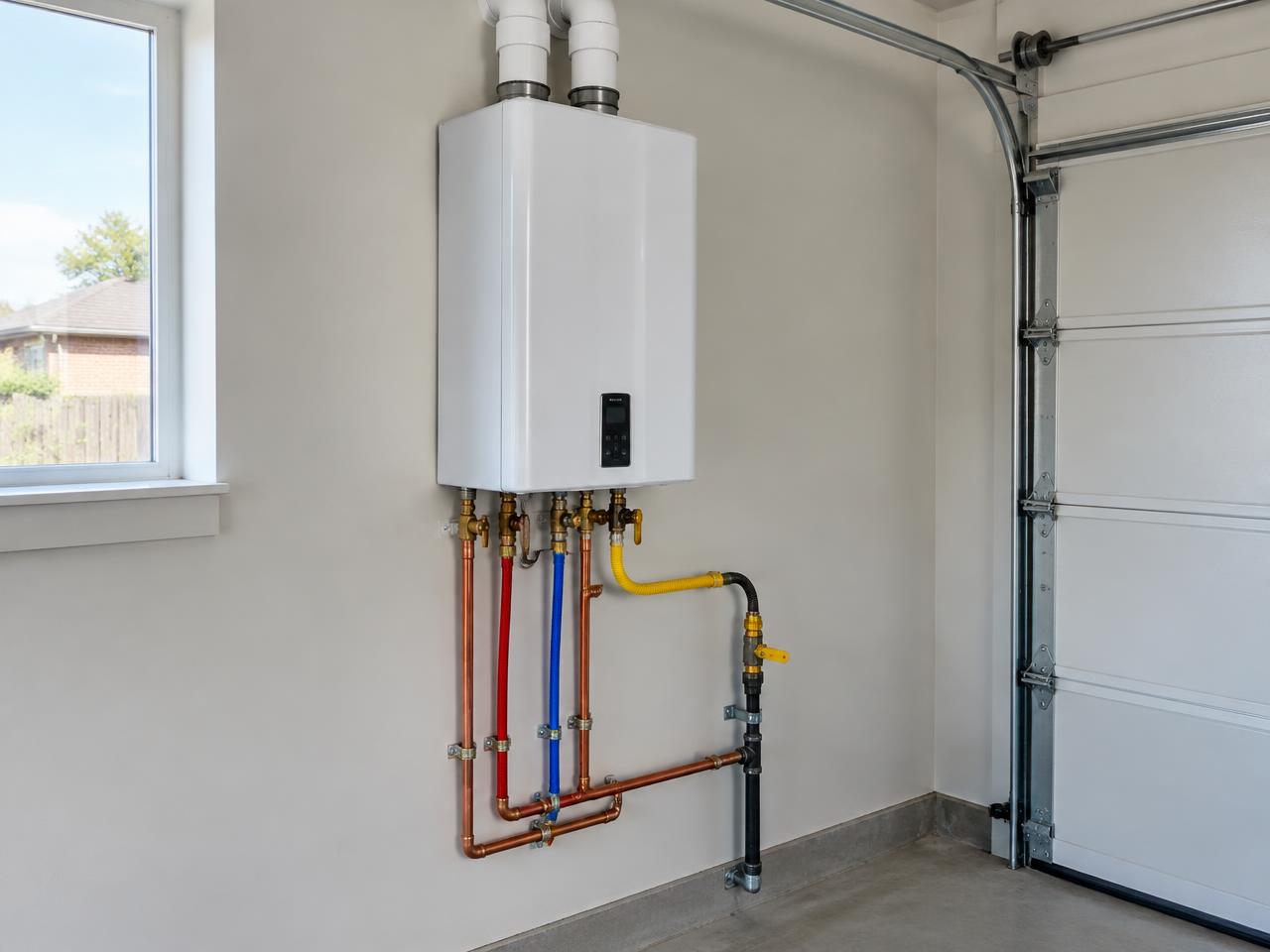
Choosing between a tank vs. tankless water heater comes down to how your household uses hot water, what your home can accommodate, and how much you want to spend now versus over time. A traditional tank water heater usually costs less to install and can be a straightforward replacement. A tankless water heater heats water on demand, takes up less space, and can reduce energy use, but installation may be more involved. Neither is automatically the better choice for every home.
For Oklahoma City-area homeowners, the best comparison starts with your family's busiest hot-water hour—not simply how many people live in the house. Here's what to weigh before replacing your current water heater.
Key Takeaways
- Choose a tank heater if a lower upfront cost and a relatively simple replacement are your priorities.
- Consider tankless if you want on-demand hot water, have suitable gas or electrical capacity, and expect to stay in the home long enough to value potential efficiency and longevity benefits.
- Size either system for peak demand. A tank can run out of stored hot water; an undersized tankless unit can struggle when several fixtures run at once.
- Get a home-specific installation assessment. Venting, fuel supply, electrical requirements, water quality, and plumbing layout can change the recommendation and the quote.
Tank vs. Tankless Water Heaters: At a Glance
| Feature | Traditional tank water heater | Tankless water heater |
|---|---|---|
| How it works | Heats and stores a set volume of water | Heats water as it flows through the unit |
| Upfront installation | Typically less expensive, especially for a like-for-like replacement | Often more expensive, especially if utilities or venting need changes |
| Hot-water availability | Limited by stored supply and recovery rate | Can keep heating while demand continues, up to the unit's flow capacity |
| Energy use | Some energy is lost keeping stored water hot | Avoids storage-tank standby losses |
| Space | Requires room for a storage tank | Typically wall-mounted and more compact |
| Typical service life | Often around 8–12 years | Often around 15–20 years with proper maintenance |
| Maintenance | Inspections, sediment management, and tank-related components | Descaling where needed, filter cleaning, and system checks |
| Best fit | Budget-conscious households and straightforward replacements | Homes seeking on-demand supply and willing to assess conversion requirements |
These are broad comparisons, not guaranteed performance or lifespan figures. Actual results depend on the model, fuel type, installation, maintenance, and household use.
How Does Each Type of Water Heater Work?
Traditional tank water heaters store a ready supply
A storage-tank heater keeps a volume of water hot until you turn on a faucet or appliance. As hot water leaves, cold water enters the tank and the heater begins recovering. Tank models are available in gas and electric versions, with different storage capacities and heating rates.
This setup is familiar and often economical to replace when your existing tank meets your needs. Its limitation appears during heavy use: if multiple showers, laundry, and dishwashing use more hot water than the tank can supply and reheat, the water may turn lukewarm until it recovers.
Tankless water heaters heat water on demand
A tankless unit activates when it detects sufficient water flow and heats that water as it passes through a heat exchanger. It doesn't maintain a large reservoir of hot water between uses.
That can support longer showers without exhausting a storage tank. But "endless hot water" does not mean unlimited hot water at every fixture simultaneously. If multiple showers and appliances demand more gallons per minute than the unit can heat at the required temperature rise, delivery can fall short. Some units also need a minimum flow before they activate.
Which Costs More: Tank or Tankless?
Tank water heaters generally have a lower initial cost
If your current heater is a conventional tank and the replacement uses the same fuel type and a compatible location, installation may require fewer changes. That usually makes a tank model the more budget-friendly upfront option.
A replacement quote can still vary with capacity, code requirements, venting, access, connections, and the condition of the existing setup. Avoid selecting a new heater based on the equipment price alone.
Tankless installation may require additional work
A tankless conversion can involve more than attaching a smaller unit to the wall. A plumber may need to evaluate:
- Gas supply: Whether the existing meter and gas piping can support the chosen gas-fired unit.
- Venting and combustion air: Whether the proposed installation meets the manufacturer's specifications and applicable code.
- Electrical supply: The unit's power needs; whole-home electric tankless models can require substantial electrical capacity.
- Water connections and condensate: Piping arrangements and drainage requirements for certain high-efficiency models.
- Location and access: Proper clearances and room for future service.
Not every conversion requires every upgrade. A site-specific estimate is more useful than a generic installation price.
Will lower energy bills make up the difference?
Tankless systems avoid standby losses from keeping a large tank hot, and efficient models can lower water-heating energy use. However, lower energy consumption does not automatically mean the lowest total cost. Your utility rates, hot-water habits, model efficiency, installation cost, and maintenance expenses all matter.
Compare the Uniform Energy Factor (UEF) and estimated annual operating cost on the models you're considering, while accounting for the fuel type. For a fair comparison, ask for the total installed cost and a realistic estimate of ongoing service needs—not a promised payback date.
Which Provides Enough Hot Water for Your Household?
The right size depends on how many fixtures are used at the same time and how much hot water they require.
Sizing a tank: Look beyond the gallon capacity
A tank's storage capacity matters, but so does its first-hour rating (FHR): roughly how much hot water it can deliver during a busy hour starting with a fully heated tank. Two tanks with the same capacity can have different recovery performance.
Think about your peak routine. Do two people shower while laundry runs? Does the dishwasher operate around the same time? Your plumber can use that demand pattern to recommend a suitable tank and recovery rate.
Sizing tankless: Check flow rate and temperature rise
Tankless capacity is usually discussed in gallons per minute (GPM) at a specified temperature rise—the difference between incoming water temperature and the desired hot-water temperature.
As incoming water gets colder, a given tankless unit may deliver fewer gallons per minute at the target temperature. That makes the published GPM rating meaningful only when paired with the conditions used to calculate it.
For example, a household that wants two showers running simultaneously needs a system sized for their combined flow, plus any other fixtures likely to run at the same time. This is a sizing exercise, not a reason to assume tankless cannot serve a larger family. A correctly designed setup may work very well; an undersized one will disappoint.
Will a tankless heater deliver hot water faster?
Not necessarily. Tankless heaters heat on demand, but the time it takes for hot water to reach a distant faucet still depends heavily on pipe length and layout. Some systems can use compatible recirculation solutions, but those need to be planned and configured properly.
If your biggest frustration is waiting for hot water at a faraway bathroom, tell the plumber. Switching heater types alone may not solve that problem.
How Long Do Tank and Tankless Water Heaters Last?
Traditional tank heaters often serve around 8–12 years, while tankless models may last 15–20 years with appropriate maintenance. These are approximate planning ranges, not expiration dates or warranties. Water quality, usage, installation, and maintenance can shorten or extend actual service life.
Tank heaters can suffer from sediment buildup and corrosion over time. A professional may inspect components such as the anode rod and recommend maintenance appropriate to the model. Tankless systems don't have the same large storage tank, but mineral scale can collect inside a heat exchanger and affect operation.
If you're wondering whether your current system is reaching the end of its useful life, read our companion article, “How Long Do Water Heaters Last? Signs It's Time to Replace Yours.” The decision should consider the heater's condition and repair history rather than its age alone.
What Maintenance Does Each System Need?
Both styles require maintenance; tankless is not maintenance-free.
A conventional tank may need periodic inspection and sediment flushing as recommended by its manufacturer, as well as checks of safety components and signs of corrosion. Tankless units may need flushing or descaling, inlet-filter cleaning, and inspections based on water hardness, model instructions, and use.
Hard-water scale is relevant in either system. Don't assume one maintenance schedule applies to every heater in the Oklahoma City area. Ask a plumber what your specific model and water conditions call for.
If your current heater is already showing problems—such as inconsistent temperature, recurring shutdowns, or leaks—maintenance isn't a substitute for diagnosis. Stanley Plumbing offers water heater repair, replacement, and tankless installation in the Oklahoma City metro.
Which Water Heater Is Right for Your Home?
A traditional tank is often a good fit when…
- Your existing tank provides enough hot water for your routine.
- You want to keep the installation straightforward and control upfront spending.
- Your home's current gas or electrical setup makes a like-for-like replacement practical.
- You prefer familiar equipment and maintenance requirements.
Tankless may be worth considering when…
- You want a compact system and have an appropriate installation location.
- Long stretches of hot-water use are common in your home.
- A qualified plumber confirms a unit can handle your simultaneous hot-water demand.
- You're comfortable evaluating a potentially higher initial investment against efficiency and service-life benefits.
Neither list replaces a proper assessment. A high-demand household could be better served by an appropriately sized tank, a properly sized tankless system, or a different configuration depending on the property.
Questions to ask before you choose
- How much hot water do we use during our busiest hour?
- Can our existing gas, electrical, and venting systems support the proposed heater?
- What is included in the installed price, including permits or necessary upgrades?
- What maintenance will the model require given our water quality?
- How does the manufacturer warranty compare, and what does it actually cover?
- Does replacing our current heater make more sense than repairing it?
Compare Tank and Tankless Options With Stanley Plumbing in Oklahoma City
Whether you're replacing an aging tank or considering tankless for the first time, the right decision starts with your home's existing setup and the way your household uses hot water.
Stanley Plumbing Services works with traditional tank water heaters and tankless systems, including Navien units, across Oklahoma City and surrounding communities. The team can assess your current heater, discuss capacity and installation requirements, and help you compare suitable options without assuming one type is right for everyone.
Explore Stanley's water heater services, learn about financing for qualifying projects, or contact Stanley Plumbing to request an estimate. You can also call (405) 766-5398.
Frequently Asked Questions
Are tankless water heaters better than tank water heaters?
Not in every situation. Tankless models can save space and avoid storage-tank standby losses, but they typically cost more to install and must be sized for simultaneous demand. Tank models often offer a lower-cost, simpler replacement. The better fit depends on your household and home.
Can a tankless water heater run two showers at once?
Yes, if it is sized for the combined flow rate and temperature rise required by those showers and any other fixtures running at the same time. An undersized unit may not supply enough hot water. A plumber can check the specifications for your home.
Does a tankless water heater provide instant hot water?
Not necessarily. Water still needs time to travel from the heater to the faucet. Tankless refers to heating without a large storage tank, not guaranteed immediate delivery at every fixture.
Is a tankless water heater cheaper to operate?
It can be, particularly when it reduces standby energy losses. Actual savings depend on the model, fuel costs, household use, and maintenance. Compare energy labels and total installed cost rather than assuming that lower energy use guarantees a fast payback.
Need a plumber today?
Call the Stanley crew for honest pricing and dependable work across the Oklahoma City metro.
Keep reading
Water Heater Not Heating? Common Causes and Next Steps
Find out why a water heater stops producing hot water, what you can safely check, and when to call a plumber in the Oklahoma City area.
Water Heater Leaking From the Bottom? Causes and What to Do
Learn what can cause water to pool beneath a water heater, which leaks may be repairable, and how to respond safely before arranging professional help.
Have a plumbing question? Send it our way.
Real people, real answers — usually the same day.
Let's fix it before it gets worse.
Small leaks turn into big repairs fast. Talk to a Stanley technician today — upfront pricing, no pressure, and work backed by 145+ years of combined experience.